

Services
Mosquito Control

Highly Recommend!!!Stephen came out after the termite swarming. Did a thorough inspection of the house and took great care of us.
Brief Description
Mosquitoes are biting insects that can quickly make yards, patios, pools, and outdoor spaces uncomfortable. In Southeast Texas, warm weather, humidity, rainfall, and standing water create ideal mosquito conditions.
Stephen Terry Pest Elimination provides mosquito control for homes and businesses in Pasadena, Deer Park, La Porte, Baytown, Southeast Houston, and surrounding areas.
Signs of Infestation
You may have a mosquito problem if you notice:
- Frequent mosquito bites when spending time outside
- Mosquitoes resting in shaded areas, shrubs, or thick vegetation
- Increased activity near patios, porches, pools, or outdoor seating areas
- Mosquitoes around standing water
- Larvae, often called “wigglers,” in water-filled containers
- Mosquitoes entering the home when doors open
- Increased activity after rain or irrigation
- Outdoor areas that become unusable around dawn or dusk
If mosquitoes are keeping you from enjoying your yard, professional mosquito control can help reduce activity.
Control Process
Our mosquito control process is designed to reduce mosquito pressure where people spend time outdoors.
- Inspect — We look for mosquito resting areas, breeding sites, shade, moisture, and standing water.
- Identify — We determine where mosquito activity is coming from and what areas need attention.
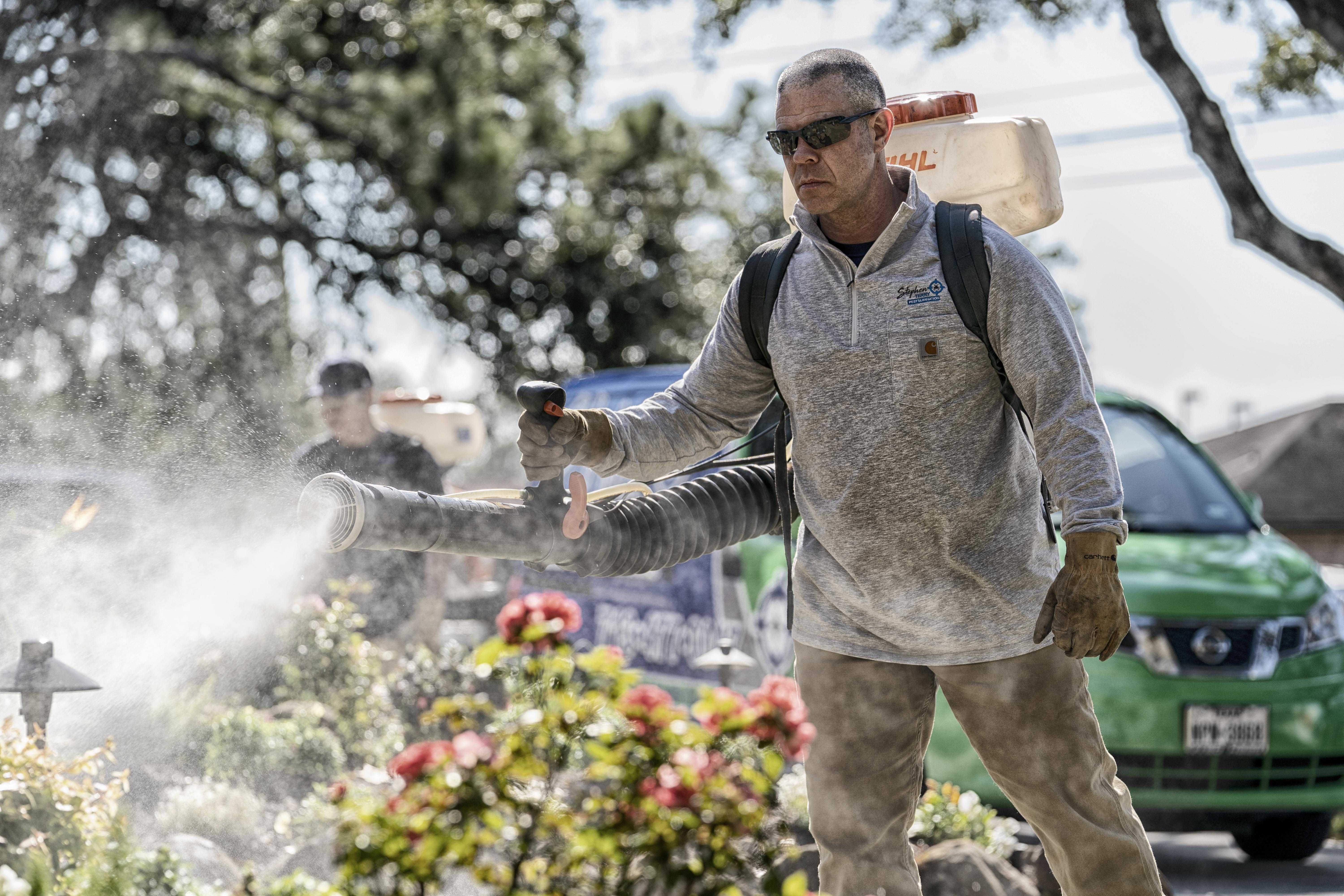
- Treat — We apply mosquito control products to targeted outdoor areas where mosquitoes rest and gather.
- Reduce Breeding Sites — We point out standing water and conditions that may be producing mosquitoes.
- Maintain Protection — We recommend ongoing service during mosquito season when needed.
Why It Matters
Mosquitoes are more than a backyard nuisance. Their bites can cause itching, swelling, irritation, and allergic reactions in some people. Certain mosquitoes can also spread illnesses such as West Nile virus.
Texas DSHS identifies West Nile virus as the leading cause of mosquito-borne disease in the United States, and the CDC recommends preventing mosquito bites and reducing mosquito habitats as key prevention steps.
Prevention Tips
Help reduce mosquito activity around your property by following these steps:
- Empty standing water at least once a week
- Clean gutters and make sure they drain properly
- Turn over buckets, toys, wheelbarrows, and containers
- Change water in birdbaths, fountains, and plant saucers regularly
- Keep pools treated and circulating
- Trim thick vegetation and overgrown landscaping
- Repair drainage problems and low spots in the yard
- Use EPA-registered mosquito repellent when spending time outdoors
Prevention is important, but mosquito control works best when breeding-site reduction is combined with professional treatment.
Pest Facts
- Only female mosquitoes bite. They need blood to produce eggs.
- Male mosquitoes feed on nectar and other plant sugars.
- Mosquito larvae live in water and come to the surface to breathe.
- Some mosquitoes can develop from egg to adult in about a week under the right conditions.
- Culex mosquitoes may lay eggs in birdbaths, buckets, tires, planters, toys, storm drains, ditches, and unmaintained pools.
- Aedes mosquitoes can lay eggs in damp areas that later flood, and some eggs can survive dry conditions until water returns.
- Mosquitoes are considered one of the most important insect pests in the world because of their ability to transmit disease.
More Information
Mosquitoes are small flies in the family Culicidae. There are many mosquito species, but common mosquito genera of concern include Culex, Aedes, and Anopheles. In Texas, mosquitoes are common throughout the state, and different species may behave differently depending on their breeding sites, preferred hosts, and activity times.
Mosquitoes go through four life stages: egg, larva, pupa, and adult. The first three stages occur in or around water. Adult female mosquitoes lay eggs in locations where water is present or where water is likely to collect. Depending on the species, eggs may be laid directly on the water surface or in damp areas that will later flood.
Larvae hatch from the eggs and live in water. These larvae are often called “wigglers” because of the way they move. They feed on organic matter and come to the surface to breathe. After the larval stage, mosquitoes become pupae, sometimes called “tumblers.” The adult mosquito then emerges from the pupal case and begins the next stage of its life cycle.
The mosquito life cycle can move quickly in warm weather. Under favorable conditions, some mosquitoes can develop from egg to adult in a short period of time. This is one reason mosquito problems can appear suddenly after rain, irrigation, flooding, or poor drainage.
Different mosquitoes use different breeding sites. Culex mosquitoes often use standing water such as storm drains, ditches, birdbaths, planters, buckets, tires, and unmaintained swimming pools. Aedes aegypti, the yellow fever mosquito, and Aedes albopictus, the Asian tiger mosquito, commonly use small containers around homes and are not strong long-distance fliers. That means mosquito activity in a yard may be coming from breeding sites on or near the property.
Female mosquitoes are the ones that bite. They use blood meals to help produce eggs. Male mosquitoes do not bite people; they feed on nectar and plant sugars. Some female mosquitoes also feed on plant sugars when they are not seeking blood.
Mosquito behavior varies by species. Some mosquitoes are most active around dawn and dusk. Others bite during the day. Some prefer birds, while others readily bite people, pets, or wildlife. Because of these differences, effective mosquito control is not just a matter of spraying one area. It requires understanding where mosquitoes are resting, where they are breeding, and what conditions are supporting them.
DIY mosquito control often fails because it only treats the mosquitoes people see. Foggers, candles, and sprays may provide temporary relief, but they do not always address shaded resting areas, hidden breeding sites, drainage problems, or nearby mosquito sources. If standing water remains, mosquitoes can continue reproducing.
Professional mosquito control focuses on reducing activity where it matters most. This may include treating shrubs, shaded vegetation, fence lines, patios, porches, entryways, and other resting areas. A technician can also identify breeding sites that homeowners may overlook, such as clogged gutters, plant saucers, French drains, low spots, tarps, toys, and containers.
The most effective mosquito control combines treatment with prevention. Reducing standing water, improving drainage, keeping vegetation trimmed, and scheduling ongoing mosquito service during peak season can help make outdoor areas more comfortable.

Gustavo from Stephen Terry Services came to inspect my property for possible issues. He was prompt, polite and most of all honest. I will definitely use this company in the future
~ A. Rountree